I still remember the time when I was listening to music on my phone while working on a project, and suddenly a video advertisement interrupted the song. It was not a big problem at first, but after it happened multiple times, it started becoming annoying.
The bigger issue was that I was not only using YouTube for music. I was also watching tutorials, podcasts, interviews, and educational videos. Paying for a music-only service felt limiting.
That is when I started comparing different streaming platforms.
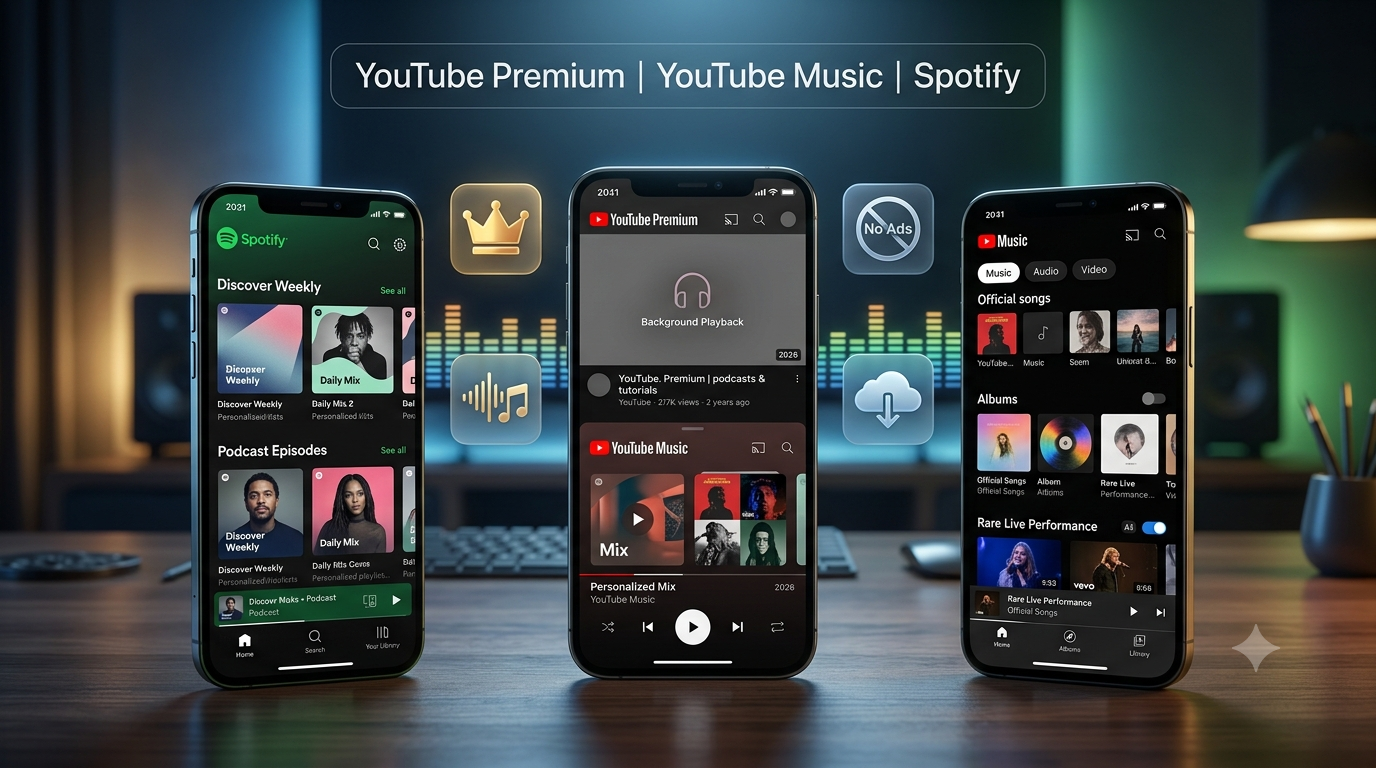
At first glance, YouTube Premium, YouTube Music, and Spotify look very similar. All three let you listen to millions of songs, create playlists, and discover new artists.
But after using these platforms for different situations — working, studying, traveling, exercising, and relaxing — I noticed that each service targets a different type of user.
Spotify focuses heavily on music discovery and personalized playlists. YouTube Music combines official songs with the massive YouTube ecosystem. YouTube Premium goes beyond music by removing ads from the entire YouTube experience.
So which one is actually worth paying for in 2026?
This detailed comparison will help you choose the best music streaming app based on your needs.
Understanding the Three Services
Before comparing features, it is important to understand that these services are not exactly the same.
YouTube Premium
YouTube Premium is a subscription service that removes ads from YouTube and includes YouTube Music Premium.
It gives access to:
- Ad-free YouTube videos
- Background playback
- Offline video downloads
- YouTube Music Premium
It is more than a music subscription.
YouTube Music
YouTube Music is a dedicated music streaming platform.
It includes:
- Official songs
- Albums
- Playlists
- Music videos
- Live performances
- Covers
- Remixes
- Fan uploads
Its biggest advantage is access to YouTube’s huge music library.
Spotify
Spotify is one of the world’s most popular music streaming platforms.
It focuses on:
- Music discovery
- Personalized recommendations
- Podcasts
- Curated playlists
- Social sharing
Spotify was built around helping users discover new music.
YouTube Premium vs YouTube Music vs Spotify: Quick Comparison
| Feature | YouTube Premium | YouTube Music | Spotify |
|---|---|---|---|
| Music Streaming | Excellent | Excellent | Excellent |
| Ad-Free YouTube Videos | ✅ Yes | ❌ No | ❌ No |
| Offline Music | ✅ Yes | ✅ Yes | ✅ Yes |
| Background Playback | ✅ Yes | ✅ Yes | ✅ Yes |
| Music Discovery | Good | Good | Excellent |
| Podcasts | Good | Limited | Excellent |
| Music Videos | Excellent | Excellent | Limited |
| Personalized Playlists | Good | Good | Excellent |
| Best Value | Excellent for YouTube users | Good for music-only users | Excellent for music lovers |
Music Library Comparison
A streaming service is only useful if it has the music you actually want.
Spotify Music Library
Spotify has a massive collection of:
- Popular songs
- Albums
- Independent artists
- Podcasts
- Audiobooks in some regions
Its strength is organization.
Finding playlists for different moods is easy:
- Workout
- Focus
- Relaxation
- Travel
- Party
Spotify feels like a personal music assistant.
YouTube Music Library
YouTube Music has a unique advantage.
Because it connects with YouTube, you can find content that may not exist on traditional music platforms.
Examples:
- Rare live performances
- Old songs
- Remixes
- Covers
- Regional music
- Independent uploads
I personally found songs on YouTube Music that were unavailable on Spotify.
For people who enjoy exploring different types of music, this is a major advantage.
Music Discovery: Which App Finds Better Songs?
This is where Spotify has always been strong.
Spotify’s recommendation system is excellent at understanding listening habits.
Features like:
- Discover Weekly
- Daily Mixes
- Release Radar
help users find new artists regularly.
For example, after listening to a few songs from a specific genre, Spotify can create a playlist that feels surprisingly accurate.
YouTube Music recommendations have improved significantly.
Because Google understands your YouTube activity, recommendations can sometimes feel personalized.
However, Spotify still feels slightly better for discovering completely new music.
Winner: Spotify
Audio Quality Comparison
For many listeners, sound quality matters.
All three services offer high-quality audio options depending on subscription plans and availability.
Spotify
Spotify provides:
- Adjustable streaming quality
- Reliable playback
- Good compression
Many users find the sound quality excellent for everyday listening.
YouTube Music
YouTube Music provides good audio quality and works well for normal listening.
Its advantage is not necessarily the highest audio quality — it is the variety of available content.
YouTube Premium
YouTube Premium includes YouTube Music Premium, so music quality is similar to YouTube Music.
For casual listeners, the difference is usually not noticeable.
For audiophiles using high-end headphones, details like codecs and lossless formats become more important.
Offline Listening Experience
All three services support offline downloads.
This is useful for:
- Flights
- Traveling
- Areas with weak internet
- Saving mobile data
Spotify has a very smooth offline experience because the app is designed primarily around music.
YouTube Music also works well, especially if you download playlists.
YouTube Premium adds offline video downloads, which is a major advantage.
Background Playback Comparison
This feature matters more than many people realize.
Without a premium subscription, YouTube videos usually stop when you leave the app.
YouTube Premium solves this problem.
You can:
- Lock your phone
- Open another app
- Continue listening
This is extremely useful for:
- Podcasts
- Interviews
- Tutorials
- Long videos
Spotify already works this way because it is designed as an audio platform.
Podcasts: Spotify vs YouTube Premium
Podcast listeners have different needs.
Spotify Advantage
Spotify has invested heavily in podcasts.
It offers:
- Podcast discovery
- Podcast playlists
- Personalized recommendations
For podcast lovers, Spotify feels more complete.
YouTube Advantage
YouTube has become a major platform for podcasts and video conversations.
Many creators upload full video podcasts on YouTube.
With YouTube Premium, you can watch or listen without ads and continue playback in the background.
Winner depends on your habits:
Audio-only podcasts → Spotify
Video podcasts → YouTube Premium
User Interface Experience
Spotify Interface
Spotify’s interface is designed around music.
It is easy to:
- Find playlists
- Browse artists
- Discover recommendations
The experience feels organized.
YouTube Music Interface
YouTube Music feels familiar if you already use YouTube.
It combines:
- Songs
- Videos
- Albums
- Shorts-style discoveries
Some users love this integration, while others prefer a cleaner music-only experience.
Battery and Data Usage
For mobile users, battery and data usage matter.
Spotify generally feels lightweight because it focuses mainly on audio.
YouTube Music may use more data when switching between music videos and audio content.
However, downloading content offline solves most issues.
Pricing: Which Subscription Gives Better Value?
Subscription prices vary by country and change over time, so it is best to check official pricing in your region.
The value depends on what you use.
If You Only Listen to Music
Spotify Premium or YouTube Music Premium makes more sense.
If You Watch YouTube Daily
YouTube Premium provides much more value because you get:
- No ads on YouTube
- Background playback
- Offline videos
- YouTube Music Premium
For heavy YouTube users, paying separately for music may not make sense.
Best Choice for Different Users
1. Students
Students often watch:
- Lectures
- Tutorials
- Educational videos
- Music playlists
Best Choice: YouTube Premium
Why?
Because it combines learning content and music.
2. Music Lovers
If your main goal is discovering new songs:
Best Choice: Spotify
The recommendation system is one of its biggest strengths.
3. YouTube Users
If YouTube is part of your daily routine:
Best Choice: YouTube Premium
The ad-free experience alone can make a huge difference.
4. People Who Like Rare Music
If you enjoy:
- Remixes
- Covers
- Live performances
- Regional songs
Best Choice: YouTube Music
Common Mistakes When Choosing a Music Streaming App
1. Choosing Based Only on Song Count
A bigger library does not always mean a better experience.
The important question is:
Can you easily find the music you actually enjoy?
2. Ignoring Your YouTube Usage
Many people subscribe to a music service while spending hours on YouTube every day.
In that case, YouTube Premium may provide better value.
3. Forgetting About Recommendations
Finding new music is a major part of the experience.
A good recommendation system can save hours of searching.
My Personal Recommendation After Testing All Three
After using all three platforms, I would choose based on lifestyle.
Choose YouTube Premium if:
- You watch YouTube every day
- You listen to podcasts
- You want ad-free videos
- You want music included
Choose Spotify if:
- Music is your main priority
- You love discovering new artists
- You want the best playlists
Choose YouTube Music if:
- You want access to rare songs and videos
- You prefer the YouTube ecosystem
- You mainly need music streaming
Final Thoughts
There is no universal winner between YouTube Premium, YouTube Music, and Spotify.
Each platform solves a different problem.
Spotify remains one of the best choices for pure music discovery and personalized playlists.
YouTube Music is perfect for people who want a massive variety of music content, including rare tracks and performances.
YouTube Premium offers the strongest overall value because it combines music streaming with a better YouTube experience.
For most people in 2026, the smartest choice is simple:
Heavy YouTube users should choose YouTube Premium.
Dedicated music listeners should choose Spotify.
People who want the biggest variety of music content should choose YouTube Music.
The best streaming app is not the one with the most features — it is the one that fits the way you actually consume content every day.